| ICHIKAWA DANJÛRÔ IX |
|
Stage names:
Other name:
Real name: Horikoshi Hideshi Guild: Naritaya, Yamazakiya [1], Tomoeya [1] Line number: KUDAIME (IX) Poetry names: Sanshô, Jukai (2), Shisen, Danju Existence: 1838 ~ 13 September 1903 Connection: Great-great-great-great-grandfather: Ichikawa Danjûrô I Great-great-great-grandfather: Ichikawa Ebizô II (Danjûrô II) Great-great-grandfather: Ichikawa Ebizô III (Danjûrô IV) Great-grandfather: Ichikawa Hakuen I (Danjûrô V) Father: Ichikawa Danjûrô VII (Ebizô V) Brothers : Ichikawa Danjûrô VIII, Ichikawa Ebizô VII, Ichikawa Ebizô VIII, Ichikawa Komazô VI, Ichikawa Saruzô I, Ichikawa Kôzô Adoptive father: Kawarasaki Gonnosuke VI Son-in-laws: Ichikawa Sanshô V (Danjûrô X), Ichikawa Shinnosuke V Daughters: Ichikawa Suisen II, Ichikawa Kyokubai II Disciples: Ichikawa Monnosuke VI, Ichikawa Chûsha VII, Ichikawa Shinzô V, Ichikawa Gangyoku II, Ichikawa Raizô V, Ichikawa Gonjûrô, Ichikawa Sumizô V, Ichikawa Saruzô III, Ichikawa Masusaburô III, Ichikawa Masuzô III, Ichikawa Kimitarô, Ichikawa Dan'emon I, Ichikawa Dan'emon II, Ichikawa Shôzô III, Ichikawa Shinjûrô II, Ichikawa Shinjûrô III, Ichikawa Danshirô II, Ichikawa Sôzaburô VI, Ichikawa Hakotora II, Ichikawa Danshô I Granddaughter: Ichikawa Suisen III Career: 1838 ~ 1844: born in Edo in the district of Sakai-chô. Fifth son of Ichikawa Danjûrô VII, his mother was not the legal wife of his father. He was adopted by Kawarasaki Gonnosuke VI, the head of the Kawarasakiza. 1st lunar month of 1845: he made his first appearance on stage, at the Kawarasakiza, where he received the name of Kawarasaki Chôjûrô III. 9th lunar month of 1852: Kawarasaki Chôjûrô III took the name of Kawarasaki Gonjûrô I, playing the role of Hatsushima Gorô in the drama "Ichi-no-Tani Futaba Gunki". 8th lunar month of 1854 [2]: his brother Ichikawa Danjûrô VIII committed suicide in Ôsaka. 29th day of the 9th lunar month of 1855 [3]: his brother Ichikawa Saruzô I died. 2nd day of the 10th lunar month of 1855 [4]: the Ansei Edo Earthquake (Ansei Edo Jishin) ravaged Edo; the Kawarasakiza was completely destroyed. Gonjûrô moved to the Ichimuraza. 1st lunar month of 1857: premiere at the Ichimuraza of Kawatake Shinshichi II's drama "Nezumi Komon Haru no Shingata" (commonly called "Nezumi Kozô"); Gonjûrô played the roles of Matsubaya Bunzô, Chôkichi and Yonosuke [casting]. 7th lunar month of 1857: premiere at the Ichimuraza of Kawatake Shinshichi II's drama "Ami Moyô Tôro no Kikukiri" (commonly called "Kozaru Shichinosuke"); Gonjûrô played the roles of Obô Kichisa and the priest Kyôshin [casting]. 3rd lunar month of 1858: premiere at the Ichimuraza of Kawatake Shinshichi II's drama "Edo Zakura Kiyomizu Seigen"; the nibanme of this drama was now entitled "Kurotegumi Kuruwa no Tatehiki" in the Kabuki repertoire (commonly called "Kurotegumi Sukeroku"); Gonjûrô played the roles of Ushiwaka Denji and Kinokuniya Bunzaemon [more details]. 2nd lunar month of 1859: premiere at the Ichimuraza of Kawatake Shinshichi II's drama "Kosode Soga Azami no Ironui" (commonly called "Izayoi Seishin"); Gonjûrô played the roles of the rônin Yaegaki Monzô [casting]. 23rd day of the 3rd lunar month of 1859 [5]: his father Ichikawa Ebizô V died. 7th lunar month of 1859: Gonjûrô plays for the first time the role of Musashibô Benkei in the drama "Kanjinchô", which was staged at the Ichimuraza; the roles of Togashi and Yoshitsune were played by Ichikawa Kodanji IV and Iwai Kumesaburô III. 9th lunar month of 1859: premiere at the Ichimuraza of Kawatake Shinshichi II's Kiyomoto-based dance "Jitsugetsusei Chûya no Oriwake", commonly called "Ryûsei" [more details]; Gonjûrô played the role of the spirit of Kengyûsei. 1st lunar month of 1860: premiere at the Ichimuraza of Kawatake Shinshichi II's drama "Sannin Kichisa Kuruwa no Hatsugai"; Gonjûrô played the role of Obô Kichisa [casting]. 3rd lunar month of 1860: premiere at the Ichimuraza of Kawatake Shinshichi II's drama "Kagamiyama Gonichi no Iwafuji"; Gonjûrô played the roles of Hasebe Tatewaki and Taga no Tairyô [casting]. 7th lunar month of 1860: premiere at the Ichimuraza of Kawatake Shinshichi II's drama "Hachiman Matsuri Yomiya no Nigiwai" (commonly called "Chijimiya Shinsuke"); Gonjûrô played the role of Shinzaburô [casting]. 3rd lunar month of 1862: premiere at the Ichimuraza of Kawatake Shinshichi II's drama "Aoto Zôshi Hana no Nishikie" (commonly called "Shiranami Gonin Otoko"); Gonjûrô played the role of Tadanobu Rihei [casting]. 5th lunar month of 1865: premiere at the Nakamuraza of Kawatake Shinshichi II's drama "Chûshingura Gonichi no Tatemae"; Gonjûrô played the roles of Oyamada Shôzaemon, Amakawaya Gihei and Harada Sukeshichi [more details]. 23rd day of the 9th lunar month of 1868 [6]: his adoptive father Kawarasaki Gonnosuke VI was killed by a thief. 3rd lunar month of 1869: Kawarasaki Gonjûrô I took the name of Kawarasaki Gonnosuke VII at the Ichimuraza and became zagashira. 9th lunar month of 1869: premiere at the Ichimuraza of Kawatake Shinshichi II's drama "Momoyama Monogatari", commonly called "Jishin Katô" ("Earthquake Katô"); Gonnosuke played the leading role of Katô Kiyomasa. This drama was a first experiment, which foreshadowed the katsureki plays. 10th lunar month of 1872: premiere at the Moritaza of Kawatake Shinshichi II's zangirimono "Tsuki no En Masu no Igaguri"; Gonnosuke played the role of Yosaburô [casting]. March 1873: premiere at the Murayamaza of Kawatake Shinshichi II's drama "Taiko no Oto Chiyû Sanryaku"; Gonnosuke played the roles of Sakai Saemon, Okabe Nagashige and Torii Tadamoto [casting]. September 1873: Kawarasaki Gonnosuke VII took the name of Kawarasaki Sanshô. July 1874: reopening of the Kawarasakiza; Kawarasaki Sanshô took the prestigious name of Ichikawa Danjûrô IX (not holden for 20 years) in his rebuilt family theater, playing the roles of Bingo no Saburô, Wada Masatô and Kusunoki Masanari in the drama "Shinbutai Iwao no Kusunoki". Premiere at the Kawarasakiza of Takeshiba Kinsaku I's Nagauta-based dance-drama "Kotobuki Ninin Shôjô"; Danjûrô played the role of a shôjô [more details]. 13 July 1874: his brother Ichikawa Ebizô VII died. October 1874: premiere at the Kawarasakiza of Kawatake Shinshichi II's drama "Kumo no Ueno San'e no Sakumae"; Danjûrô played the role of Kôchiyama Sôshun [casting]. May 1875: revival at the Kawarasakiza of Kawatake Shinshichi II's drama "Kusunoki-ryû Hanami no Makuhari", which was entitled "Hanamidoki Yui no Makuhari"; Danjûrô played the roles of Matsudaira Izu-no-Kami and Yui Shôsetsu [more details]. Spring 1875:: Danjûrô, a talented actor but a poor zamoto, gave up the management of the Kawarasakiza and went on tour in the Jôshû and Yashû provinces. October 1875: premiere at the Nakamuraza and the Shinboriza of Takeshiba Kinsaku I's drama "Minori no Aki Seishô Denki"; Danjûrô played the roles of Satô Masakiyo and Kajiya Seikichi [more details]. December 1877: premiere at the Shintomiza of Kawatake Shinshichi II's drama "Kômonki Osana Kôshaku"; Danjûrô played the roles of Kômon Mitsukuni-kyô, Inaba Mino-no-Kami, Ôkura Yaemon, the nakama Mito no Jûzô & Shichibê (a performer at the Niwaka Festival) [more details]. June 1878: premiere at the Shintomiza of the 2-part dance-drama "Botan-ni Chô Ôgi no Irodori". The second part, "Suehiro no Shiroharigasa", has survived and became the Nagauta-based dance-drama "Genroku Hanami Odori"; Danjûrô performed in this dance [more details]. October 1878: premiere at the Shintomiza of Kawatake Shinshichi II's drama "Jitsugetsusei Kyôwa Seidan"; Danjûrô played the roles of Sasagawa Kôjûrô, Nomura Kuranoshin (in reality thief Akatsuki Hoshiemon) and Ôzakaya Kihachi (in reality the thief Akatsuki Hoshiemon) [casting]. February 1879: premiere at the Shintomiza of Kawatake Shinshichi II's drama "Ningen Banji Kane no Yo no Naka"; Danjûrô played the role of Keori Gorôemon [casting]. 16 July 1879: Danjûrô took part in the gala night at the Shintomiza in the honor of the General Ulysses S. Grant [more details]. March 1881: premiere at the Shintomiza of Kawatake Mokuami's masterpiece "Kumo ni Magou Ueno no Hatsuhana"; Danjûrô played the role of Kôchiyama Sôshun [casting]. June 1881: premiere at the Shintomiza of Kawatake Shinshichi II's jidaimono "Youchi Soga Kariba no Akebono" [casting]; Danjûrô played the roles of Soga Gorô Tokimune and Kudô Saemon Suketsune. Premiere in the same theater of Kawatake Shinshichi II's dance-drama "Tsuchi-gumo", which was staged to commemorate the 32nd anniversary (33rd memorial service) of late Onoe Kikugorô III; Danjûrô played the roles of a Kyôgen performer and Gunnai [casting]. October 1881: premiere at the Harukiza of Kawatake Shinshichi II's drama "Kiwametsuki Banzui Chôbê"; Danjûrô played the role of Banzui Chôbê [casting]. November 1881: premiere at the Shintomiza of Kawatake Mokuami's zangirimono drama "Shima Chidori Tsuki no Shiranami"; Danjûrô played the role of Mochizuki Akira [casting]. November 1882: Danjûrô played at the Saruwakaza the role of Soga Gorô Tokimune in the bombastic "Ya-no-Ne" scene. May 1883: Danjûrô played at the Ichimuraza the role of the deity Fudô Myôô, an important symbol for the Naritaya guild, in the drama "Hashi Kuyô Bonji no Mongaku". November 1884: premiere at the Saruwakaza of Kawatake Mokuami's katsureki drama "Hôjô Kudai Meika no Isaoshi"; Danjûrô played the role of Hôjô Takatoki [casting]. January 1885: two dances were staged at the Chitoseza, about to reopen in February 1885 with a new name. From the 4th to the 7th of January, two auspicious dances and a kôjô with the troupe led by Danjûrô were staged. The sanbasô was staged with Ichikawa Sadanji I (Okina), Bandô Kakitsu I (Senzai) and Onoe Kikugorô V (Sanbasô). This was also the premiere of the Nagauta-based dance-drama "Tsuru Kame" [more details]. November 1885: premiere at the Shintomiza of Kawatake Mokuami's Nagauta-based matsubamemono "Funa Benkei"; Danjûrô played the roles of Shizuka Gozen and the spirit of Taira no Tomomori [casting]. 12 November 1886: his brother Ichikawa Ebizô VIII died. 26 April 1887: the emperor enjoyed Kabuki for the first time at the residence of Inoue Kaoru, the Minister of Foreign Affairs. The casting included the three leading stars Danjûrô, Onoe Kikugorô V and Ichikawa Sadanji I. October 1887: premiere at the Shintomiza of Kawatake Mokuami's matsubamemono "Momijigari"; Danjûrô played the roles of Princess Sarashina and the ogress of Mount Togakushi [casting]. November 1889: Danjûrô became zagashira at the newly-built Kabukiza. July 1890: premiere at the Shintomiza of "Kiyomasa Seichûroku", a revised version of Kawatake Shinshichi III's 1875 drama "Minori no Aki Seishô Denki". It was part of a special 2-day gala program starring Danjûrô; he played the roles of Katô Kiyomasa and Tokugawa Ieyasu [more details]. He also played in this gala program the role of Soga Gorô Tokimune in the bombastic drama "Ya-no-Ne". March 1891: premiere at the Kabukiza of Fukuchi Ôchi's drama "Buyû no Homare Shusse Kagekiyo", a revised revival of Chikamatsu Monzaemon's jidaimono "Shusse Kagekiyo"; Danjûrô played the roles of Taira no Kagekiyo and the carpenter Rokuzô [casting]. October 1892: premiere at the Kabukiza of the matsubamemono "Suô Otoshi", starring Danjûrô and Nakamura Fukusuke IV in the roles of Tarôkaja and the Princess. March 1893: premiere at the Kabukiza of Fukuchi Ôchi's Nagauta-based dance "Shunkyô Kagami Jishi"; the roles of Yayoi and the spirit of the Lion were played by Danjûrô; his two daughters played the roles of the butterflies. November 1893: Danjûrô took part in the opening ceremony of the Meijiza, rebuilt and managed by Ichikawa Sadanji I [more details]. April 1897: premiere at the Kabukiza of Fukuchi Ôchi's drama "Otokodate Harusame Gasa"; Danjûrô played the role of Ôguchiya Jihê, later Ôguchiya Gyôu [more details]. October 1897: première of Fukuchi Ôchi's drama "Ômori Hikoshichi" at the Meijiza; Danjûrô played the role of Ômori Hikoshichi [casting]. November 1897: Danjûrô played at the Kabukiza the role of Fujiwara no Shihei in "Shihei no Nana Warai", which was the second act of Namiki Gohachi's drama "Tenmangû Natane no Gokû" revised by Fukuchi Ôchi. April 1899: Danjûrô played for the last time the role of Musashibô Benkei in the drama "Kanjinchô", which was staged at the Kabukiza; the roles of Togashi and Yoshitsune were played by Onoe Kikugorô V and Ichikawa Metora II. March 1903: premiere at the Kabukiza of the drama "Kichirei Soga no Ishizue", which was produced to celebrate the shûmei of Onoe Kikugorô VI, Onoe Baikô VI and Onoe Eizaburô VI; Danjûrô played the role of Kudô Saemon Suketsune [casting]. May 1903: Danjûrô appeared on stage for the last time, at the Kabukiza, where he played the roles of Ofuku no Kata, Kasuga no Tsubone and Tokugawa Ieyasu in the drama "Kasuga no Tsunone". 13 September 1903: Danjûrô died in Tôkyô. Comments: Ichikawa Danjûrô IX belonged to the triumvirat of stars who dominated the Kabuki world during the Meiji era (the two others were Onoe Kikugorô V and Ichikawa Sadanji I). He spent lots of time and energy pioneering a new genre called katsureki but the Tôkyô audience was more receptive to his amazing performances in the great roles of Kabuki like Ôboshi Yuranosuke ("Kanadehon Chûshingura"), Kumagai Jirô Naozane ("Kumagai Jin'ya"), Sukeroku ("Sukeroku Yukari no Edo Zakura") or Benkei ("Kanjinchô"). "Ichikawa Danjûrô, the ninth, was the torch-bearer of Kabuki during the long reign of the Emperor Mutsuhito, known as the Meiji era, which endured for forty-five years ( 1868-1912). Danjûrô, the ninth, was the bridge that spanned the sudden gulf which yawned between the traditional past and the uncertain and changing modern world. He may be regarded as the saviour of Kabuki during a period when it might have suffered shipwreck, had there not been a man of genius at the helm to guide the craft through the troubled waters." (Zoë Kincaid in "Kabuki, the Popular Stage of Japan") En travaillant les profiles psychologiques et émotionnels de ses héros et en exigeant de ses auteurs (Kawatake Mokuami, Fukuchi Ôchi) un effort intense en terme de véracité historique, il crée un nouveau genre, le katsureki (abréviation de katsudô rekishi, « l'histoire vivante »). Le public ne suit pas et boude le Katsureki, dont les pièces sont souvent terriblement ennuyeuses. Amer, Ichikawa Danjûrô IX déclare en 1893 : « les créations de ce genre [katsureki] me donnent un mal fou alors que les spectateurs n'y prennent aucun plaisir. Pourtant, lorsque je monte une pièce du vieux répertoire, je n'ai qu'à prendre une belle pose pour que, comblés, ils éclatent en applaudissements. Alors puisque c'est comme ça, les créations d'œuvres nouvelles, maintenant ça suffit, basta ! » (source : Le Kabuki devant la modernité). [1] His yagô during his Kawarasaki years. [2] The 6th day of the 8th lunar month of the 7th year of the Kaei era was the 27th of September 1854 in the western calendar. [3] The 29th day of the 9th lunar month of the 2nd year of the Ansei era was the 8th of November 1855 in the western calendar. [4] The 2nd day of the 10th lunar month of the 2nd year of the Ansei era was the 11th of November 1855 in the western calendar. [5] The 23rd day of the 3rd lunar month of the 6th year of the Ansei era was the 25th of April 1859 in the western calendar. [6] The 23rd day of the 9th lunar month of the 1st year of the Meiji era was the 7th of November 1868 in the western calendar. |

 |
|
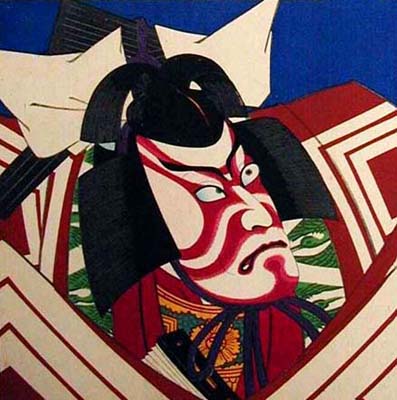
The actor Ichikawa Danjûrô IX playing the role of Kamakura Gongorô Kagemasa in the bombastic drama "Shibaraku", which belong to the Kabuki Jûhachiban (print made by Torii Kiyosada) Print made by Utagawa Toyokuni in 1861 Print made by Utagawa Toyokuni in 1861 Print made by Utagawa Yoshitsuya in 1862 Print made by Toyohara Kunichika in 1863 Print made by Toyohara Kunichika in 1871 Print made by Toyohara Kunichika in 1871 Print made by Toyohara Kunichika in 1873 Print made by Toyohara Kunichika in 1877 Print made by Yôshû Chikanobu in 1881 Print made by Toyohara Kunichika in 1882 Print made by Toyohara Kunichika in 1887 The Ichikawa Jukai line of actors The Kawarasaki Chôjûrô line of actors The Kawarasaki Gonjûrô line of actors The Kawarasaki Gonnosuke line of actors The Ichikawa Danjûrô line of actors |
|
|
| Contact | Main | Top | Updates | Actors | Plays | Playwrights | Programs | Links | FAQ | Glossary | Chronology | Illustrations | Prints | Characters | Derivatives | Theaters | Coming soon | News |