JULY 2026

5 shows in Tôkyô (Kabukiza, Ôta City Residents Hall Aprico, Shinbashi Enbujô, MoN Takanawa), 1 in Ôsaka (Kintetsu Art Kan) & 1 tour (Shôchiku Grand Kabuki)!

  • Living National Treasure Kataoka Nizaemon, Living National Treasure Nakamura Baigyoku, Living National Treasure Nakamura Karoku, Ichikawa Danjûrô, Matsumoto Kôshirô, Nakamura Shikan, Nakamura Senjaku, Kataoka Takatarô, Nakamura Kinnosuke, Onoe Matsuya, Ichikawa Udanji, Nakamura Yonekichi, Nakamura Hayato & Nakamura Takanosuke perform at the Kabukiza!
  • Onoe Kikugorô, Nakamura Jakuemon, Kataoka Ainosuke & Bandô Hikosaburô are on tour (Shôchiku Grand Kabuki)!
  • Nakamura Ganjirô, Bandô Shingo, Nakamura Kikaku & Nakamura Mantarô perform at the Ôta City Residents Hall Aprico!
  • Young actors perform at the Shinbashi Enbujô!
  • Kabukiza (Tôkyô)
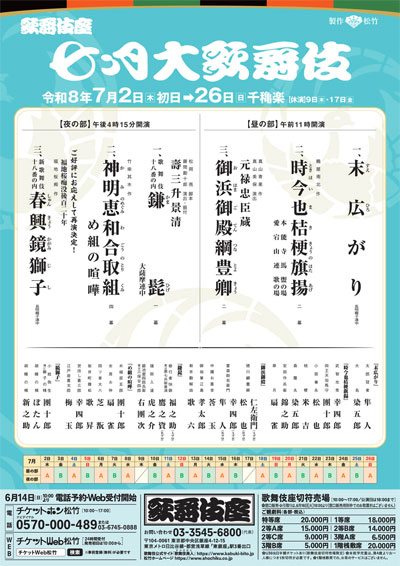
    Dates 2 ~ 26 July 2026
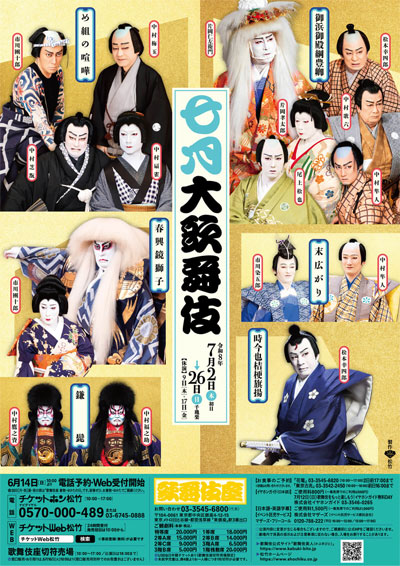
    Shichigatsu Ôkabuki
    July Grand Kabuki
    Matinée

    Suehirogari

    Toki-ha Ima Kikyô no Hataage (Badarai)

    Genroku Chûshingura
    (Ohama Goten Tsunatoyo-kyô)

    Evening

    Kamahige

    Kami no Megumi Wagô no Torikumi
    (Megumi no Kenka)

    Shunkyô Kagami Jishi

    Casting

    Living National Treasure Kataoka Nizaemon, Living National Treasure Nakamura Baigyoku, Living National Treasure Nakamura Karoku, Ichikawa Danjûrô, Matsumoto Kôshirô, Nakamura Shikan, Nakamura Senjaku, Kataoka Takatarô, Nakamura Kinnosuke, Onoe Matsuya, Ichikawa Udanji, Nakamura Yonekichi, Nakamura Hayato, Nakamura Takanosuke, Nakamura Kashô, Nakamura Kangyoku, Nakamura Toranosuke, Ichikawa Somegorô, Nakamura Fukunosuke, Ichikawa Shinnosuke, Ichikawa Botan

    Comments

    The usual July Grand Kabuki programs at the Kabukiza.

  • Suehirogari: a master (Ichikawa Somegorô) gives a big sum of money to his servant Tarôkaja (Nakamura Hayato) and asks him to buy him a suehirogari at the market. Tarôkaja is not familiar with the word suehirogari and doesn’t know that it means a fan. He arrives at the market and is fooled by a mischievous merchant into buying an old umbrella instead. When his master sees Tarôkaja coming back with an umbrella, he becomes upset and starts scolding him for being such a fool. But Tarôkaja starts singing and dancing to get himself out of trouble and the master ends up forgiving him and happily singing and dancing with him.
  • Badarai: based on the true historical story of Akechi Mitsuhide who betrayed his lord Oda Nobunaga and ruled Japan for a few short days before being defeated by Toyotomi Hideyoshi, this play focuses on Mitsuhide and his tortured relationship with the arrogant and unreasonable lord Nobunaga. It is one of the few period plays by Tsuruya Nanboku IV still performed today and brings the same sharp psychological insight and eye for the attractiveness of evil characters that make his ghost plays and plays about commoners so powerful. Featuring Matsumoto Kôshirô, Ichikawa Danjûrô, Nakamura Senjaku and Onoe Matsuya in the roles of Takechi Mitsuhide (because of strict censorship, the real names were not used), Shihôten Tajima-no-Kami, Mitsuhide's wife Satsuki and Oda Harunaga.
  • Ohama Goten: there are few plays more popular in Kabuki than "Chûshingura" or the Treasury of the Forty-Seven Loyal Retainers. In the modern period, this play was reworked by Mayama Seika as "Genroku Chûshingura", a play focusing on different incidents and different characters in this revenge classic adding historical details reflecting the Genroku period. One of the most popular parts of this play shows the man that will be the next Shôgun, seemingly detached from the vendetta, but in fact, intensely interested in the progress of the quest of the band of loyal retainers. Starring Living National Treasure Kataoka Nizaemon/Onoe Matsuya as Lord Tsunatoyo and Matsumoto Kôshirô/Nakamura Hayato as Tominomori Sukeemon. With Nakamura Kangyoku as Okiyo, Kataoka Takatarô as Ejima and Living National Treasure Nakamura Karoku as Tsunatoyo’s teacher Arai Kageyû.
  • Kamahige:
    (Shaving a Beard with a Sickle)
    This is one of the leisurely, fanciful plays from the "Eighteen Favorite Plays" of the Ichikawa Danjûrô Family. A larger-than-life villain is disguised as a humble pilgrim. He asks a servant at the inn where he stays to give him a shave, but the servant is actually a great hero and offers to cut his beard with an outsize sickle, in fact looking for an opportunity to cut his head off. The play ends with a spectacular stage fight. Starring Ichikawa Udanji, Nakamura Takanosuke, Nakamura Toranosuke and Nakamura Fukunosuke.
  • Megumi no Kenka: they used to say that fights and fires were the flowers of the city of Edo and many plays feature the gallent members of firefighting troupes, who were popular heroes. This particular play depicts a rivalry between the members of the Megumi firefighting band and a group of sumô wrestlers, which ultimately is a confrontation between the firefighters, who represent the commoner class and the samurai patrons of the sumô wrestlers. The fight begins with a minor incident, but grows into a situation of such tension, that when Tatsugorô, the leader of the firefighting gang, goes to his final fight, he goes with the full intention that this may be a fight to the death. Before he leaves, he has an emotional parting from his family. Featuring Ichikawa Danjûrô as Tatsugorô and Nakamura Shikan as the leader of the group of sumô wrestlers. Featuring also Nakamura Senjaku (Tatsugorô's wife Onaka), Living National Treasure Nakamura Baigyoku and Matsumoto Kôshirô.
  • Kagami Jishi: one of the most important dances for onnagata female role specialists and is an audience favorite. The maidservant Yayoi performs an auspicious lion dance for the Shôgun in his opulent palace, but she gradually finds herself under the control of the lion spirit. In the second half of the dance, the lion spirit itself appears and performs its crazed dance among peonies and fluttering butterflies. Starring Ichikawa Danjûrô as both Yayoi and the spirit of the lion.
  • Sources: Earphone Guide Website or Shôchiku Kabuki Official Website

    Shôchiku Grand Kabuki Tour
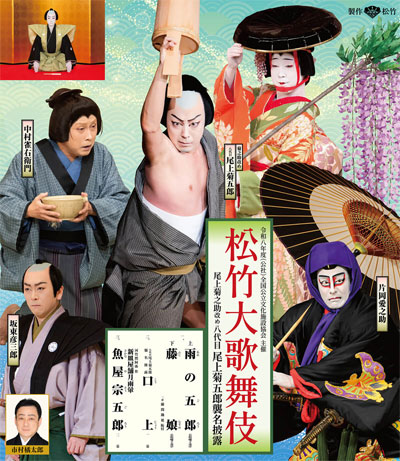
    Dates 7 ~ 31 July 2026
    Shôchiku Ôkabuki
    Shôchiku Grand Kabuki
    Program

    Ame no Gorô

    Fuji Musume

    Kôjô

    Shin Sarayashiki Tsuki no Amagasa
    (Sakanaya Sôgorô)

    Casting

    Onoe Kikugorô, Nakamura Jakuemon, Kataoka Ainosuke, Bandô Hikosaburô, Ichimura Kitsutarô

    Comments

    The Shôchiku Grand Kabuki Tour in 19 cities to celebrate the shûmei of Onoe Kikugorô VIII. There are 2-day 4 performances at the Kôrakukan, an old Meiji-era theater in Kosaka (Akita Prefecture).

  • Ame no Gorô: Soga no Gorô is one of the most famous heroes in the Kabuki world, super-strong and quick to fight. However, this dance shows the soft side of this hero as well as he travels nightly to the pleasure quarter to visit his lover. Starring Kataoka Ainosuke as Gorô.
  • Fuji Musume: the spirit of wisteria blossoms dances of love in the form of a beautiful young maiden. One of Kabuki's most famous and colorful dances, it will feature the dancing skills of Onoe Kikugorô.
  • Kôjô: the close relationship between the actors and the audience is shown by these stage announcements, lavish ceremonies to commemorate various important events. In this case, all the stars of the cast assemble to celebrate the shûmei of Onoe Kikugorô VIII.
  • Sakanaya Sôgorô: Sôgorô (Onoe Kikugorô), a fish seller, has taken a vow to not drink, but when he learns about his sister's unjust murder at the hands of a daimyô lord, a death that they were told was execution for her wrongdoing, he starts to drink again. Drunk, he storms into the lord's mansion to seek an apology. This play by Meiji playwright Kawatake Mokuami is known for its realistic portrayal of members of the common class during the Edo period and highlights their fierce pride and frustration at the privileges of the dominant samurai class. Featuring also Nakamura Jakuemon, Kataoka Ainosuke and Bandô Hikosaburô.
  • Sources: Earphone Guide Website or Shôchiku Kabuki Official Website

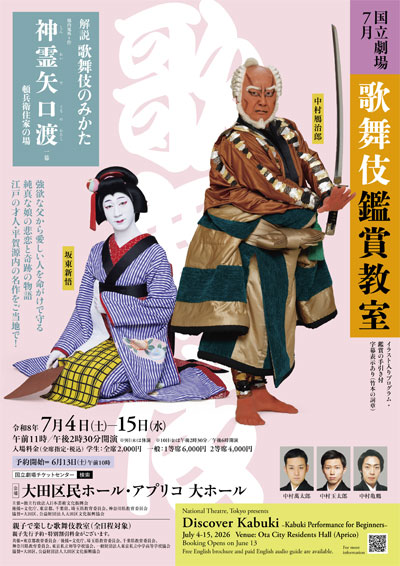
    Ôta City Residents Hall Aprico (Tôkyô)
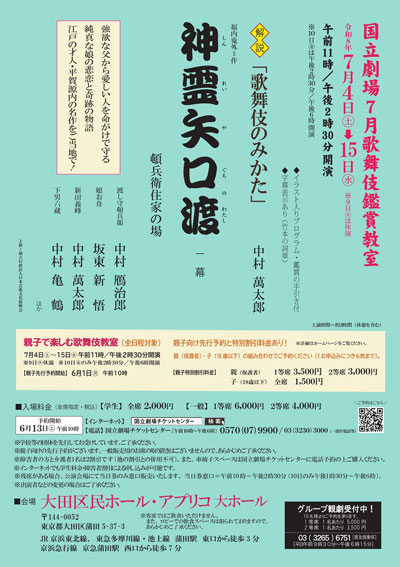
    Dates 4 ~ 15 July 2026
    Shichigatsu Kabuki Kanshô Kyôshitsu
    July Kabuki Appreciation Class
    Program

    Kabuki no Mikata

    Shinrei Yaguchi no Watashi (Tonbê Sumika)

    Casting

    Nakamura Ganjirô, Bandô Shingo, Nakamura Kikaku, Nakamura Mantarô

    Comments

    Educational program at the Ôta City Residents Hall Aprico in Tôkyô called Kabuki Kanshô Kyôshitu ("Kabuki Appreciation Class"). This is the 110th edition and a very interesting formula for the beginners because there is lively presentation on stage (Kabuki no Mikata) of Kabuki or some aspects of the art like music, stage tricks or fighting scenes. It is followed by "Tonbê Sumika".

  • Tonbê Sumika: this play was written by Hiraga Gennai, an Edo inventor, explorer and writer of comic fiction. Young Ofune is the obedient daughter of her evil father Tonbê, the keeper of a river crossing. She meets and falls in love with a young fugitive. Unfortunately, her father wants to capture the fugitive for a reward and Ofune can only save his life by sacrificing her own. Starring Bandô Shingo and Nakamura Ganjirô in the roles of Ofune and Tonbê.
  • Sources: Earphone Guide Website or Shôchiku Kabuki Official Website

    Shinbashi Enbujô (Tôkyô)
    Dates 3 July ~ 23 August 2026
    Program

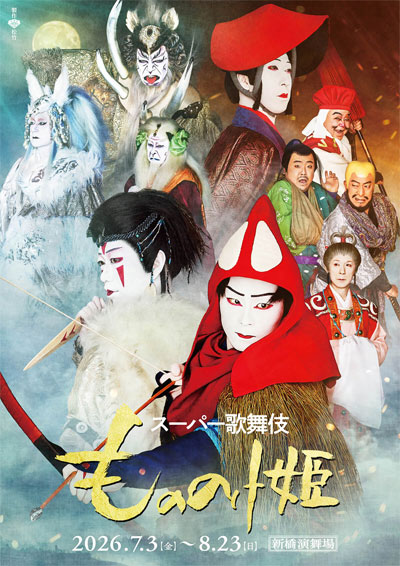
    Mononoke-hime [In Japanese]

    Casting

    Nakamura Kazutarô, Ichikawa Danko, Nakamura Tokizô, Ichikawa Chûsha, Ichikawa Monnosuke, Ichikawa En'ya, Ichikawa Emisaburô, Ichikawa Emiya, Ichikawa Juen, Ichikawa Seiko

    Comments

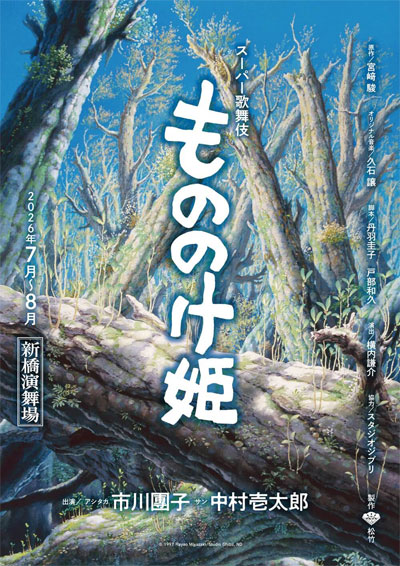
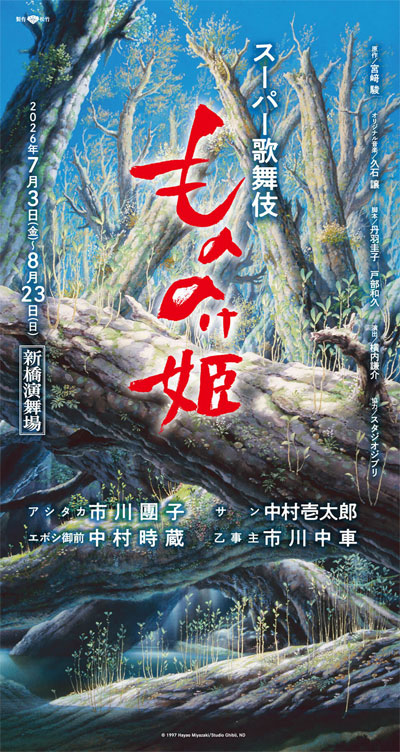
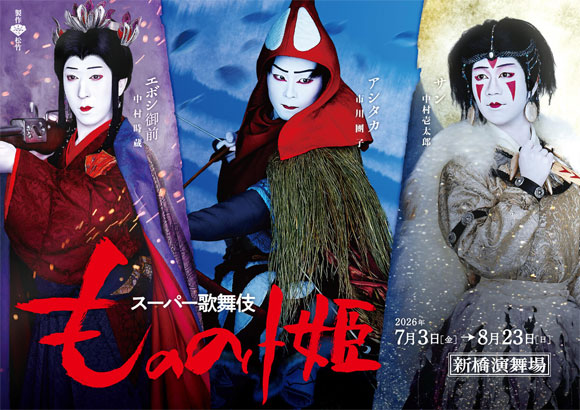
    Sûpâ Kabuki adaptation of Miyazaki Hayao's 1997 masterpiece "Princess Mononoke" with Ichikawa Danko and Nakamura Kazutarô in the roles of Ashitaka and San.

  • Mononoke-hime: This summer, Super Kabuki "Princess Mononoke" is performed at the Shinbashi Enbujô. Original story and screenplay written and directed by Miyazaki Hayao, the film "Princess Mononoke" is a masterpiece from Studio Ghibli that portrays an epic story of nature and humanity. This timeless classic is now be brought to life as a Super Kabuki production, captivating audiences with spectacular scale and dynamic staging. Sûpâ Kabuki ('Super Kabuki' in English) is a subgenre of modern Kabuki created by Ichikawa En'ô II. It is a new type of Kabuki characterized by epic stories told on a grand scale, incorporating contemporary staging styles that resonate deeply with modern audiences. This upcoming production vividly depicts the fierce conflict between humanity and nature, and the hope for coexistence, weaving together the intertwined destinies of Ashitaka (Ichikawa Danko) and San (Nakamura Kazutarô), the people of the Iron Town led by Eboshi Gozen (Nakamura Tokizô), and the gods inhabiting the forest, including the blind boar god Okkoto (Ichikawa Chûsha). Featuring also Ichikawa Monnosuke (Gonza), Ichikawa En'ya (Jiko), Ichikawa Emisaburô (the wolf goddess Moro), Ichikawa Emiya (the Oracle), Ichikawa Juen (an ape) and Ichikawa Seiko (Kôroku).
  • Sources: Earphone Guide Website or Shôchiku Kabuki Official Website

    MoN Takanawa (Tôkyô)
    Dates 7 ~ 31 July 2026
    Shôchiku Ôkabuki
    Shôchiku Grand Kabuki
    Program

    Kôjô

    Kaisetsu Kabuki no Mikata

    Dokyumentarî Eizô

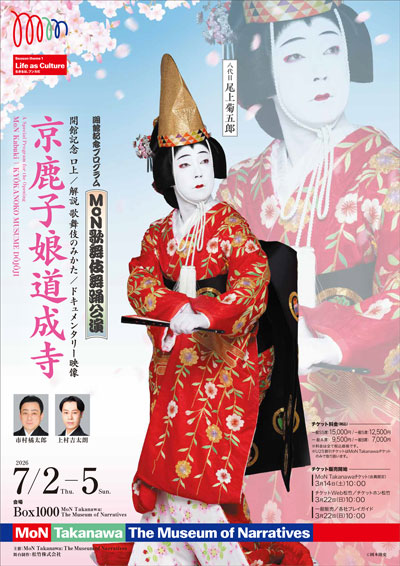
    Kyôganoko Musume Dôjôji

    Casting

    Onoe Kikugorô, Ichimura Kitsutarô, Kamimura Kichitarô

    Comments

    A special Kabuki program in Tôkyô at the MoN Takanawa located in the Takanawa Gateway City. The Museum of Narratives opened the 29th of March 2026 and this program celebrates the opening. The first 3 items are 1 kôjô, a lively presentation on stage (Kabuki no Mikata) and a special video screening (documentary).

  • Musume Dôjôji: a beautiful young woman dances under cherry blossoms at a dedication ceremony for a temple bell. She dances the many aspects of a woman in love, but is actually the spirit of a serpent, driven to destroy the bell out of jealousy. In addition to being the most famous of all Kabuki dances, "Musume Dôjôji" is considered to be the pinnacle of the art of the onnagata. The role of the shirabyôshi is played by Onoe Kikugorô.
  • Sources: Earphone Guide Website or Shôchiku Kabuki Official Website

    Kintetsu Art Kan (Ôsaka)
    Dates 31 July ~ 3 August 2026
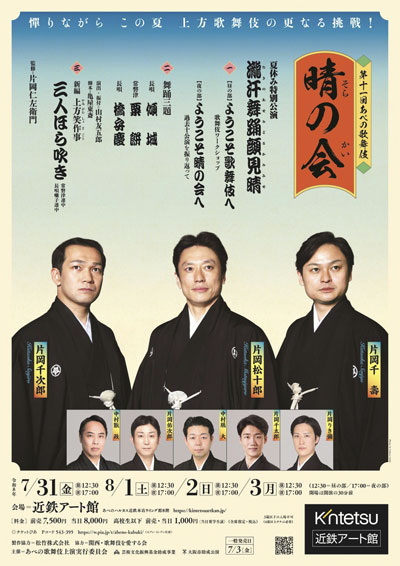
    Sora no Kai
    Matinée

    Taki no Ase Odoru Kaomise

  • Yôkoso Kabuki he
    (Kabuki Wâkushoppu)
  • Buyô Sandai

  • Keisei
  • Awa Mochi
  • Hashi Benkei
  • Kamigata Shôsagoto

    Evening

    Taki no Ase Odoru Kaomise

  • Yôkoso Sora no Kai he
    (Kako Jû Kôen o furikaette)
  • Buyô Sandai

  • Keisei
  • Awa Mochi
  • Hashi Benkei
  • Kamigata Shôsagoto

    Casting

    Kataoka Matsujûrô, Kataoka Senjirô, Kataoka Senju, Nakamura Kansei, Kataoka Yûjirô, Kataoka Rikiya, Kataoka Yûjirô, Kataoka Sentarô, Nakamura Gandai

    Comments

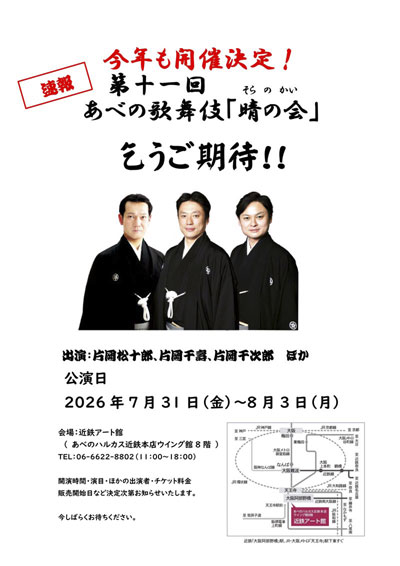
    The 11th gala of the Sora no Kai (literally 'Sky Society'), in Ôsaka at the Kintetsu Art Kan, which stars mostly disciples of the Matsushimaya guild. These performances are entitled Abeno Kabuki (Abeno is the name of a famous district in Ôsaka). Two performances each day, one at 12:00 and one at 17:00. Under the supervision of Living National Treasure Kataoka Nizaemon and the dance master Yamamura Tomogorô III.

     
    Search this site powered by FreeFind
      Site map | Disclaimer
    Contact | Main | Top | Updates | Actors | Plays | Playwrights | Programs | Links | FAQ | Glossary | Chronology | Illustrations | Prints | Characters | Derivatives | Theaters | Coming soon | News