MAY 2026

5 shows in Tôkyô (Kabukiza, Theater MILANO-Za, Sunshine Theatre, Asakusa Kôkaidô), 2 in Ôsaka (Shôchikuza) & 1 in Kyôto (Minamiza)!

  • Living National Treasure Kataoka Nizaemon, Living National Treasure Nakamura Karoku, Nakamura Ganjirô, Nakamura Senjaku, Nakamura Kaishun, Kataoka Ainosuke, Nakamura Kankurô, Nakamura Shichinosuke, Kataoka Takatarô, Nakamura Kazutarô, Nakamura Matagorô, Nakamura Hayato, Nakamura Yonekichi & Kamimura Kichiya perform at the Shôchikuza!
  • Living National Treasure Onoe Kikugorô, Living National Treasure Nakamura Baigyoku, Ichikawa Danjûrô, Onoe Kikugorô, Nakamura Manju, Nakamura Jakuemon, Onoe Shôroku, Onoe Ukon, Bandô Minosuke, Nakamura Tokizô & Onoe Tatsunosuke perform at the Kabukiza!
  • Ichikawa Chûsha & Ichikawa Danko perform at the Theater MILANO-Za!
  • Young actors perform at the Asakusa Kôkaidô!
  • Young actors perform at the Minamiza!
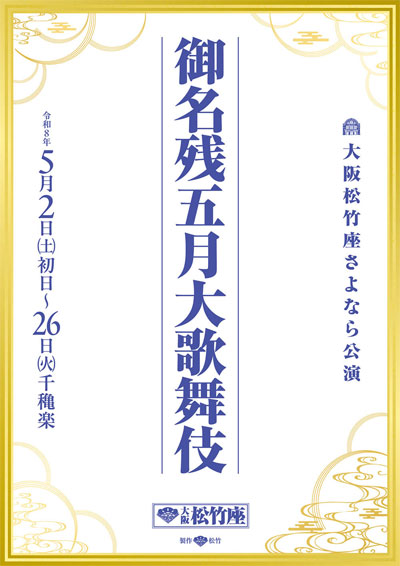
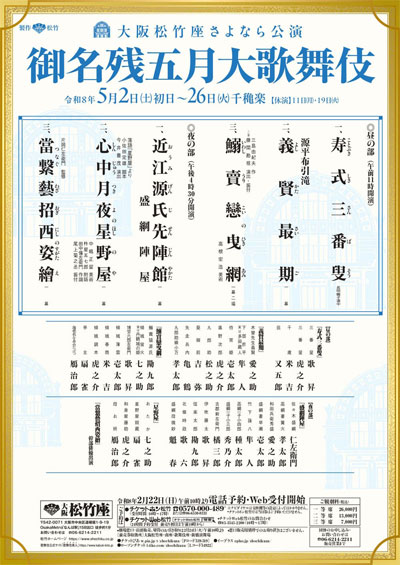
  • Shôchikuza (Ôsaka)
    Dates 2 ~ 6 May 2026 (Onagori Gogatsu Ôkabuki)
    Farewell May Grand Kabuki
    Matinée

    Kotobuki Shiki Sanbasô

    Genpei Nunobiki no Taki
    (Yoshikata Saigo)

    Iwashi Uri Koi no Hikiami

    Evening

    Ômi Genji Senjin Yakata
    (Moritsuna Jin'ya)

    Shinjû Tsukiyo no Hoshinoya [In Japanese]

    Tsunagu Wazaogi Nishi no Sugatae

    Casting

    Living National Treasure Kataoka Nizaemon, Living National Treasure Nakamura Karoku, Nakamura Ganjirô, Nakamura Senjaku, Nakamura Kaishun, Kataoka Ainosuke, Nakamura Kankurô, Nakamura Shichinosuke, Kataoka Takatarô, Nakamura Kazutarô, Nakamura Matagorô, Nakamura Hayato, Nakamura Yonekichi, Kamimura Kichiya, Nakamura Kikaku, Nakamura Kashô, Nakamura Toranosuke, Arashi Kitsusaburô, Kataoka Matsunosuke, Nakamura Hidenosuke, Nakamura Tanetarô

    Comments

    The historic Shôchikuza, located in the vibrant heart of the Dôtonbori district in Ôsaka and affectionately nicknamed the 'Arc de Triomphe of Dôtonbori', will definitively close its doors at the end of May 2026. 2nd of the two Ôsaka Shôchikuza Sayonara Kôen, the Shôchikuza Farewell Performances.

  • Kotobuki Shiki Sanbasô: Okina is the oldest ritual in the theater. This Kabuki version shows Okina, an old man who symbolizes eternal youth, his attendant Senzai and the vigorous Sanbasô, who perform dances solemnly for good fortune. Sanbasô dances vigorously, stamping and shaking bells, praying for agricultural fertility and prosperity for all. This dances features Nakamura Kashô, Nakamura Toranosuke, Nakamura Matagorô & Nakamura Yonekichi in the roles of a sanbasô, another sanbasô, the okina & the senzai.
  • Yoshikata Saigo: the full-length play shows the early rise of the Genji clan after a time of oppression. Yoshikata (Kataoka Ainosuke) is the lone member of the Genji clan and pretends to have no interest in reviving its fortunes, but Yukitsuna (Nakamura Hayato) a good-humored footman who is actually a spy, realizes his true intentions. Yoshikata is about to have a son, the general Yoshinaka, who will lead the Genji to victory, but Yoshikata himself is attacked and surrounded and dies in a spectacular scene where he falls from the top of a flight of stairs. Featuring also Kataoka Takatarô in the role of Koman.
  • Iwashi Uri:
    (The Princess and the Sardine Seller)
    A modern play by novelist Mishima Yukio, this recreates the leisurely, comic atmosphere of early 18th century Kabuki. A sardine seller famous for his vigorous chanting falls in love with a beautiful courtesan and disguises himself as a wealthy patron, only to discover that she is actually a princess that ran away from her family after falling in love with the call of a sardine seller. Starring Nakamura Kankurô as the sardine seller and Nakamura Shichinosuke as the princess. Featuring also Nakamura Ganjirô, Nakamura Senjaku, Nakamura Kazutarô, Nakamura Toranosuke & Nakamura Kashô.
  • Moritsuna Jin'ya: this play is one of the greatest classics of the jidaimono historical play style. Two brothers, Sasaki Moritsuna and Sasaki Takatsuna are generals on opposing sides. Moritsuna's forces are greater in number and strength, but his brother's brilliant strategies allow him to escape by preying on Moritsuna's psychological weaknesses. Ruthlessly, Takatsuna has his son sacrifice his life to force Moritsuna to identify the head of an imposter as that of his dead brother. Starring Living National Treasure Kataoka Nizaemon as Moritsuna, with Kataoka Takatarô as Kagaribi (the wife of Takatsuna), Nakamura Kazutarô as Hayase (the wife of Moritsuna), Living National Treasure Nakamura Karoku as Hôjô Tokimasa, Kataoka Ainosuke as the crafty general Wada no Hyôe and Nakamura Kaishun as Mimyô (the mother of the Sasaki brothers). Featuring also Nakamura Kankurô in the comical role of Shigaraki Tarô.
  • Shinjû Tsukiyo no Hoshinoya: this is a newly written play adapted from a rakugo story. Teruzô (Nakamura Senjaku) has lost his money in a speculative venture. He and his concubine Otaka (Nakamura Shichinosuke) promise to commit shinjû, 'lovers' double suicide', but when the time comes he alone jumps into the river and she returns home as her mother recommended. Later, Tôsuke (Nakamura Toranosuke) tells her that Teruzô's ghost appeared warning that he will haunt her. Terrified, she takes the tonsure and becomes a nun, after which Teruzô himself reappears. The double suicide was Teruzô's test of her sincerity. Featuring also Nakamura Ganjirô as Otaka’s mother Okuma.
  • Nishi no Sugatae:
    A Portrait of Kamigata Artistry Handed Down Through the Ages
    Since its grand opening in May 1923, the Ôsaka Shôchikuza has been affectionately known as the "Arc de Triomphe of Dôtonbori." Following its reopening as a premier theater in March 1997, it has continued to host a vibrant array of productions, with Kabuki at its heart. As a refreshing early summer breeze sweeps through the historic Dôtonbori theater district, we gather to celebrate the enduring prosperity of Kabuki. This particular performance marks a spectacular highlight in the final chapter of the Ôsaka Shôchikuza’s "Farewell" series. Featuring all top-ranking actors.
  • Sources: Earphone Guide Website or Shôchiku Kabuki Official Website

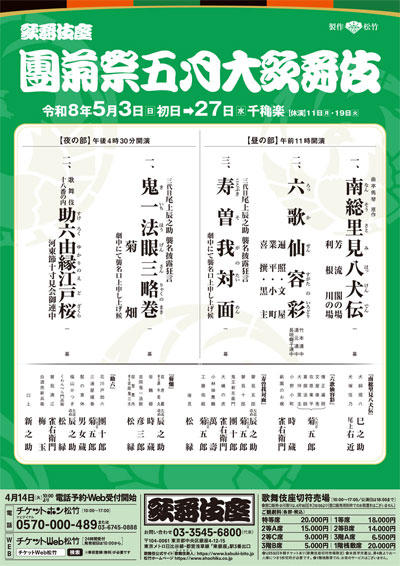
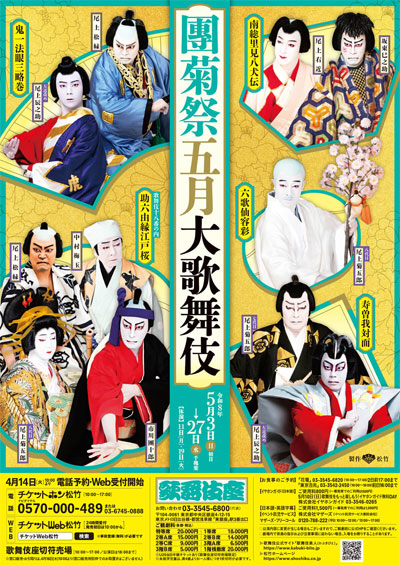
    Kabukiza (Tôkyô)
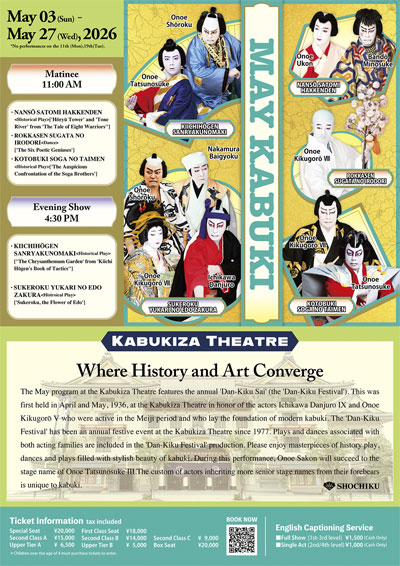
    Dates 3 ~ 27 May 2026
    Dankikusai Gogatsu Ôkabuki
    Dankikusai May Grand Kabuki
    Matinée

    Nansô Satomi Hakkenden (Hôryûkaku/Tonegawa)

    Rokkasen Sugata no Irodori

  • Henjô
  • Bun'ya
  • Narihira/Komachi
  • Kisen
  • Kuronushi
  • Kotobuki Soga no Taimen

    Evening

    Kiichi Hôgen Sanryaku no Maki (Kikubatake)

    Sukeroku Yukari no Edo Zakura

    Casting

    Living National Treasure Onoe Kikugorô, Living National Treasure Nakamura Baigyoku, Ichikawa Danjûrô, Onoe Kikugorô, Nakamura Manju, Nakamura Jakuemon, Onoe Shôroku, Onoe Ukon, Bandô Minosuke, Nakamura Tokizô, Onoe Tatsunosuke, Bandô Hikosaburô, Bandô Kamezô, Ichikawa Omezô, Ichikawa Sai'nyû, Kataoka Ichizô, Ichimura Kakitsu, Kawarasaki Gonjûrô, Ichimura Manjirô, Bandô Shingo, Nakamura Takanosuke, Nakamura Mantarô, Nakamura Tanenosuke, Ichikawa Kudanji, Ôtani Hirotarô, Ôtani Hiromatsu, Ichikawa Shinnosuke, Sawamura Kiyoshirô, Ichimura Takematsu, Ichikawa Otora, Nakamura Tamatarô, Ichikawa Ukon, Nakamura Kamenojô, Nakamura Kichinojô, Ichimura Kitsutarô, Onoe Kikuichirô, Bandô Tamao

    Comments

    The great yearly Dankiku festival is back at the Kabukiza! This important festival for the Naritaya and Otowaya guilds commemorates 2 great stars of the Meiji era: Dan = Ichikawa Danjûrô IX and Kiku = Onoe Kikugorô V. This month, it celebrates the shûmei of Onoe Tatsunosuke III.

  • Hakkenden:
    (The Eight Dog Warriors)
    The original novel is an immense epic by 19th century novelist Takizawa Bakin published over many years, but eventually reaching one-hundred and sixty volumes. Following the dowfall of the Satomi Clan, eight magical crystal, each engraved with the Chinese characters of one of the Confucian virtues, have been scattered into the air. Miraculously, each was finally found with a newborn baby, all of whom have the character inu for "dog" in their names. They eventually meet and join together to restore the Satomi clan. The two scenes from this long play features the spectacular fight on top of a roof between Inuzuka Shino (Onoe Ukon), falsely accused of the stealing of a famous sword, and his pursuer Inukai Genpachi (Bandô Minosuke). They fight without realizing that they are indeed allies. Featuring also Bandô Hikosaburô as Inuyama Dôsetsu.
  • Rokkasen: a rare full-length performance of a humorous series of dances, which show the ancient poetic geniuses famous from classical Japanese literature, reinterpreted to the tastes of Edo period audiences. Ono no Komachi, the only woman of the six, was famous as a great beauty and in this dance, all the other poets are in love with her. The first dances are filled with the atmosphere of the Heian period imperial court, but then changes to a contemporary scene. Starring Onoe Kikugorô in the five male roles (Henjô, Bun'ya, Narihira, Kisen and Kuronushi) and Nakamura Jakuemon and Nakamura Tokizô in the roles of Okaji and Ono no Komachi.
  • Soga no Taimen: this is one of the oldest and most classical of all Kabuki plays. In the Edo period, every January, plays appeared about the vendetta carried out by the Soga brothers Jûrô and Gorô after eighteen years of hardship. In "Soga no Taimen" the brothers confront Kudô Suketsune, the man responsible for their father's death. More ceremony than play, it features each of the important Kabuki character types, including the bombastic aragoto style of Gorô and the soft wagoto style of Jûrô. This month features a cast headed by Living National Treasure Onoe Kikugorô as Kudô and some of the most popular young stars in Kabuki with Onoe Tatsunosuke as Gorô and Onoe Kikugorô as Jûrô. Featuring Nakamura Manju, Bandô Shingo, Nakamura Jakuemon and Ichikawa Danjûrô as Kobayashi no Maizuru, the courtesan Kewaizaka no Shôshô (Gorô's lover), the courtesan Ôiso no Tora (Jûrô's lover) and Oniô Shinzaemon (Jûrô's retainer).
  • Kikubatake: it is a great classic of period play Kabuki originally adapted from the Bunraku puppet theatre, full of larger-than-life characters and a stage full of dazzling color. In a garden of brilliant yellow and white chrysanthemums, there is Kiichi (Bandô Hikosaburô), an elderly strategist working for the dictator Kiyomori, his beautiful daughter Minazuru (Nakamura Tokizô) and two footmen, the elegant young Torazô (Onoe Tatsunosuke) and the powerful Chienai (Onoe Shôroku). But in fact, Torazô is a young general from the enemy side here to steal Kiichi’s secrets of strategy. Chienai is his retainer. But Kiichi has realized why they are there and also knows that Chienai is actually his younger brother. At the same time, Minazuru has fallen deeply in love with Torazô.
  • Sukeroku: the dandy Sukeroku is the most famous patron of the Yoshiwara pleasure quarters. But his reputation as the lover of Agemaki, the highest ranking courtesan in the quarter is matched by that of his tendency to pick fights. In fact, Sukeroku is the samurai Soga no Gorô in disguise, and he uses the fights to find a lost heirloom sword. His search takes place in the colorful atmosphere of the Yoshiwara where processions of beautiful courtesans compete with the splendor of cherry blossoms in full bloom. All the top stars in Kabuki appear in a procession of beautiful, exciting and amusing roles. Starring Ichikawa Danjûrô and Onoe Kikugorô as Hanakawado Sukeroku and Miuraya Agemaki. Featuring also Ichikawa Omezô, Living National Treasure Nakamura Baigyoku, Nakamura Jakuemon, Onoe Tatsunosuke, Nakamura Tokizô, Onoe Ukon, Onoe Shôroku and Nakamura Takanosuke in the roles of Ikyû, the shirozake seller Shinbê, Mankô Gozen, Fukuyama Katsugi, the courtesan Miuraya Shiratama, the passer-by, Kanpera Monbê and Asagao Senpei.
  • Sources: Earphone Guide Website, Shôchiku Kabuki Official Website or others sources

    Theater MILANO-Za (Tôkyô)
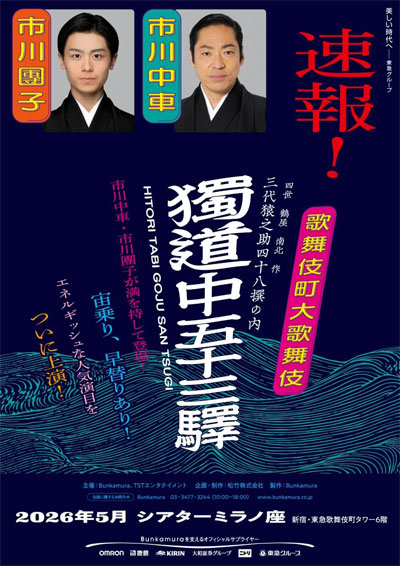
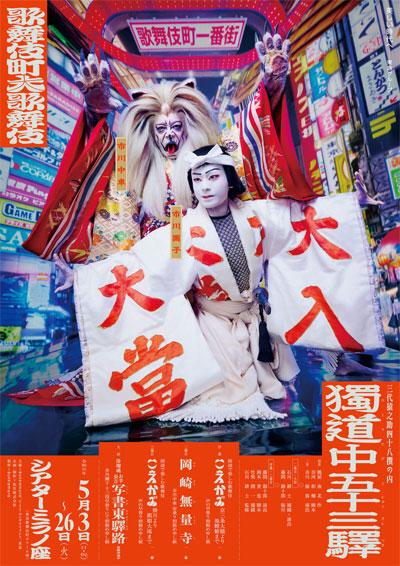
    Dates 3 ~ 26 May 2024
    Kabukichô Ôkabuki
    Kabukichô Grand Kabuki
    Program

    Hitori Tabi Gojûsan Tsugi

    Casting

    Ichikawa Chûsha, Ichikawa Danko, Ichikawa Emisaburô, Ichikawa Emiya, Ichikawa Juen, Ichikawa Seiko

    Comments

    Grand Kabuki right in the heart of the Kabukichô entertainment district near Shinjuku Station! The Theater MILANO-Za is located within the Tôkyû Kabukichô Tower.

  • Hitori Tabi Gojûsan Tsugi:
    (Traveling Alone to the Fifty-three Stations)
    "Hitori Tabi Gojûsan Tsugi" was first performed in 1827, and was written by the famous playwright Tsuruya Nanboku IV (1755 - 1829). It built on the popular explosion of fascination of travel on this highway seen in the bestselling comic novel "Hizakurige" ("Shanks Mare") about the adventures of Yaji and Kita on the road and lavish series of multi-colored woodblock prints showing all fifty-three stations along the highway. But in addition to the expected travel scenes and comedy of Yaji and Kita, audiences also got a spectacular series of scenes scary, sexy and comic reworking all Nanboku's favorite themes including a monstrous cat. Ichikawa Ennosuke III was long specialized in reviving Nanboku’s plays, each production including Ennosuke’s trademark fast-changes and flight through the air. May at Theater MILANO-Za features the main actors of the Omodakaya headed by Ichikawa Ennosuke III's grandson Ichikawa Danko and Ichikawa Ennosuke III's son Ichikawa Chûsha in a full-length performance of this exciting and entertaining spectacle. 17 non-Kabuki actors are the guest-stars of this production.
  • Sources: Earphone Guide Website, Shôchiku Kabuki Official Website or others sources

    Minamiza (Kyôto)
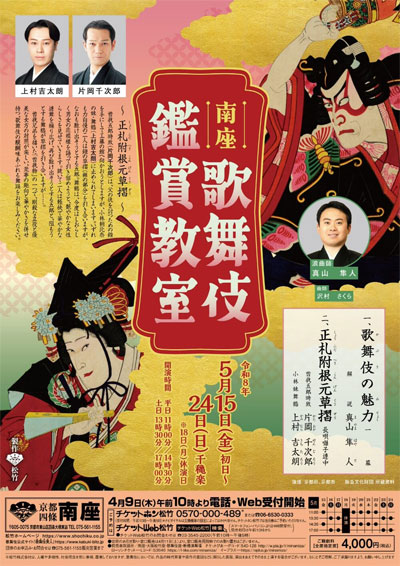
    Dates 15 ~ 24 May 2026
    Kabuki Kanshô Kyôshitsu
    Kabuki Appreciation Class
    Program

    Kabuki no Miryoku

    Shôfudatsuki Kongen Kusazuri

    Casting

    Kamimura Kichitarô, Kataoka Senjirô

    Comments

    Young actors performing in Kyôto at the Minamiza.

    Sunshine Theatre (Tôkyô)
    Dates 30 May ~ 7 June 2026
    Zenshinza Kabuki Kôen
    Zenshinza Kabuki Performances
    Program

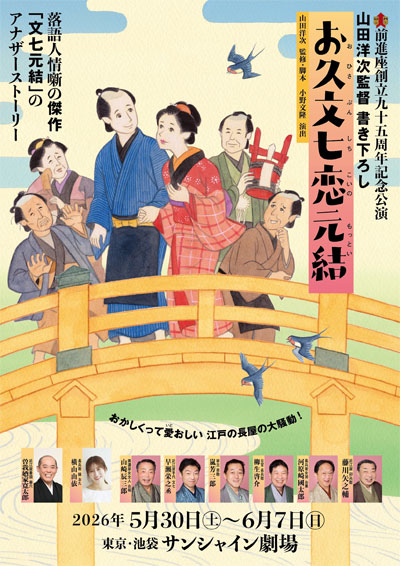
    Ohisa Bunshichi Koi no Mottoi
    Newly-created drama made by Yamada Yôji and based on "Bunshichi Mottoi"

    Casting

    Kawarasaki Kunitarô, Arashi Yoshisaburô, Fujikawa Yanosuke, Yamazaki Tatsusaburô, Matsunami Kihachirô, Hayase Einojô, Arashi Ichitarô, Yagyû Keisuke, Soganoya Kantarô & others

    Comments

    The usual Zenshinza Spring program, not at the National Theatre (closed) but at the Sunshine Theatre (Tôkyô)! It celebrates the 95th anniversary of this troupe, founded in 1931! The guest star is the Shinkigeki actor Soganoya Kantarô.

    Asakusa Kôkaidô (Tôkyô)
    Dates 1 ~ 3 May 2026
    Kamiyachô Shôkabuki
    Kamiyachô Little Kabuki
    Program

    Goaisatsu

    Shin Sarayashiki Tsuki no Amagasa
    (Sakanaya Sôgorô)

    Akutarô

    Casting

    Nakamura Hashinosuke, Nakamura Fukunosuke, Nakamura Utanosuke, Nakamura Matsue, Nakamura Kangyoku, Nakamura Shinobu, Nakamura Baika

    Comments

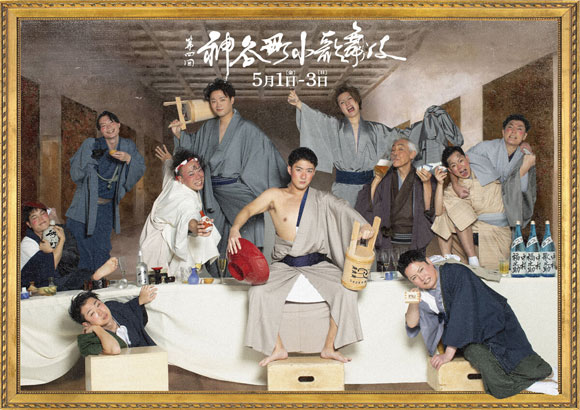
    4th edition of a gala for Nakamura Shikan's three sons. It is entitled Kamiyachô Shôkabuki ('Kamiyachô Little Kabuki'). Kamiyachô was the name of late Nakamura Shikan VII's neighboorhood in Tôkyô and it was used as an original way to appraise this great actor (kakegoe).

  • Goaisatsu: a kôjô with Nakamura Fukunosuke and Nakamura Utanosuke.
  • Sakanaya Sôgorô: Sôgorô (Nakamura Hashinosuke), a fish seller, has taken a vow to not drink, but when he learns about his sister's unjust murder at the hands of a daimyô lord, a death that they were told was execution for her wrongdoing, he starts to drink again. Drunk, he storms into the lord's mansion to seek an apology. This play by Meiji playwright Kawatake Mokuami is known for its realistic portrayal of members of the common class during the Edo period and highlights their fierce pride and frustration at the privileges of the dominant samurai class. Featuring also Nakamura Fukunosuke, Nakamura Utanosuke, Nakamura Matsue, Nakamura Kangyoku, Nakamura Shinobu & Nakamura Baika.
  • Akutarô: this dance is based on a comic Kyôgen play and was written for Ichikawa En'ô and was one of his specialities. This dance shows a wild drunkard named Akutarô (Nakamura Fukunosuke). He appears with a bushy beard and long halberd and waves it around wildly. But his uncle (Nakamura Hashinosuke) has a plan to cure him of drinking. Featuring also Nakamura Utanosuke.
  • Sources: Earphone Guide Website or Shôchiku Kabuki Official Website

     
    Search this site powered by FreeFind
      Site map | Disclaimer
    Contact | Main | Top | Updates | Actors | Plays | Playwrights | Programs | Links | FAQ | Glossary | Chronology | Illustrations | Prints | Characters | Derivatives | Theaters | Coming soon | News